Inicio


WhatsApp, llamadas y SMS suplantando a la Seguridad Social para obtener datos bancarios
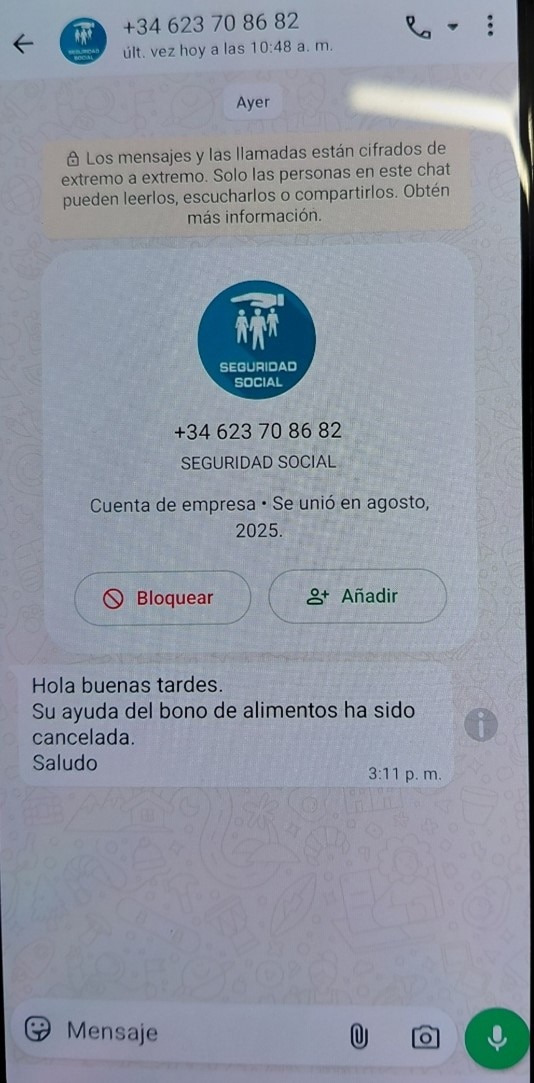
Se ha detectado una campaña de suplantación de identidad en nombre de la Seguridad Social (ver imagen anterior), que se ejecuta de forma coordinada a través de WhatsApp, llamadas telefónicas y SMS como parte de la misma estafa.
¿Cómo se llevan a cabo?
La campaña comienza con un mensaje de WhatsApp en el que se menciona una supuesta ayuda ofrecida por la Seguridad Social. Posteriormente, el ciudadano recibe una llamada telefónica que refuerza la narrativa, indicando que es necesario proporcionar un número de cuenta para realizar el ingreso. Finalmente, se envía un SMS con un enlace fraudulento, donde se solicita introducir los datos bancarios. Todo esto forma parte de una misma estafa, diseñada para generar confianza mediante múltiples canales.
¿A quién se dirigen?
Este tipo de fraude está dirigido principalmente a ciudadanos que esperan recibir prestaciones económicas de la Seguridad Social.
¿Para qué?
El objetivo principal es obtener información financiera sensible, como el número de cuenta, para cometer fraudes posteriores, realizar transferencias no autorizadas o incluso vender los datos en mercados ilícitos.
¿Qué recomendamos?
Recomendamos no proporcionar datos personales, ni bancarios, por canales no oficiales. La Seguridad Social nunca solicita datos bancarios por WhatsApp, llamadas o SMS. Ante cualquier comunicación que prometa ayudas económicas, se debe verificar directamente con la entidad que habitualmente las reconoce, como puede ser el INSS o en el caso de desempleo, con el SEPE. Además, recomendamos no acceder a enlaces recibidos por SMS o mensajería instantánea sin confirmar su autenticidad.
¿Cómo podemos identificar que una comunicación es fraudulenta?
Algunas señales claras son: mensajes que generan urgencia, errores gramaticales, enlaces que no corresponden al dominio oficial, y solicitudes de información sensible por medios inseguros.
Recomendaciones y recursos
En caso de duda, se recomienda llamar a los teléfonos oficiales de la Seguridad Social para comprobar si la comunicación es real o no. También está disponible la web del Instituto Nacional de Ciberseguridad (INCIBE) con más información.